Protective Services
Abuse and neglect of older adults happen all too often, but we’re doing something about these problems. Our Protective Services team investigates reports of abuse of adults age 60+, caregiver neglect, and self-neglect, and intervenes when possible to offer older adults a choice to live in safe, supportive environments, with access to the help and services they need.
What is abuse of older adults?
Abuse of older adults refers to intentional or neglectful acts by a caregiver or trusted individual that lead to, or may lead to, the harm of a vulnerable older adult age 60 or older. It takes many forms:
- Physical (including domestic violence)
- Financial exploitation
- Caretaker neglect or abandonment
- Emotional, psychological, or verbal
- Sexual
- Self-neglect
What are some warning signs?
The older adult:
- Seems isolated or withdrawn
- Experiences unusual weight loss
- Has a sudden change in financial situation
- Has bedsores, unattended medical needs, or poor hygiene
- Has bruises, pressure marks, broken bones, abrasions, and/or burns
- Seems fearful or confused
The caregiver’s behavior toward the senior is belittling, threatening, or overly controlling.
When intervention is necessary, our team provides intensive casework services to older adults and their families. Our Protective Services staff also evaluate self-neglect situations, when an older person is having difficulty maintaining their independence at home. Help is available 24 hours a day through the state’s Abuse Hotline: 1-800-922-2275. All referrals are treated confidentially—we never disclose who requested help for an older adult—and unless there are questions about competency or outside pressure, individuals can always decline help.
How do I report abuse of an older adult?
Reporting Abuse: 1-800-922-2275
If you suspect that an older adult is being mistreated or is neglecting their own care, you should immediately report your suspicions. Some people—like first responders, medical professionals, and social workers—are mandated reporters, but anyone can and should report suspicions of abuse an older person. Except in rare cases, when referral to the District Attorney is necessary or as requested through court orders, the identity of the reporter is always kept confidential.
The state’s Executive Office of Aging & Independence staffs an Abuse Hotline to simplify the process for reporting. All calls (day or night, 7 days a week) go directly to the Massachusetts-based call center (1-800-922-2275) regardless of the where the reporter or the older adult lives. While the initial intake is centralized, all reports are referred to, and handled by, local Protective Services agencies like GLSS for screening, investigation, and service planning.
For complete information on how to file an abuse report and to take the first step, please go here: https://www.mass.gov/how-to/report-elder-abuse.
Program Brochures
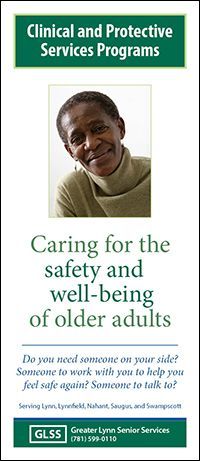
Clinical and Protective Services
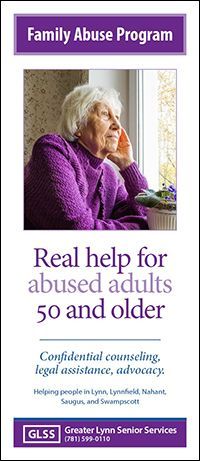
Family Abuse Program
Who is this service for?
This is a free, state-mandated service for older adults who are experiencing abuse or neglect (including self-neglect) in Lynn, Lynnfield, Nahant, Saugus, and Swampscott.
Why wonder or why wait?
Call us today at
781-599-0110, or email your questions to info@glss.net.
Information & Referral staff are available Monday-Friday,
9:00 a.m.-5:00 p.m.
(except holidays).
Call and ask for Protective Services.