Family Caregiver Support
The Family Caregiver Support Program (FCSP) provides support for people who are caring for an aging parent, spouse or partner, friend or neighbor, or an older adult who is raising a grandchild or caring for an adult child with disabilities.
Finding ways to cope with the challenges of caregiving can be difficult, but we're here to help.
Caregiver Support Services include:
- Assessment Services
Personalized assessments to help identify your unique caregiving needs and challenges.
- Information, Resources, and Referrals
Guidance on available community resources, along with referrals to specific services and programs designed to support you and your loved one.
- Caregiver Counseling
Emotional support and counseling to help you cope with the stress, worry, and feelings of isolation that caregivers often experience.
- Education and Training
Skill-building education and training to support caregiving responsibilities, including specialized guidance for caring for individuals with Alzheimer’s disease and other forms of dementia.
- Support Groups
In-person and virtual support groups where caregivers can share experiences, exchange helpful tips, and find encouragement and understanding.
- Individual Care Planning
One-on-one meetings with caregivers and families to develop personalized plans that ensure the best possible care for their loved ones.
- Respite Care Assistance
Help locating respite care services so caregivers can take meaningful breaks from their caregiving responsibilities.
- Special Events and Programs
Opportunities to connect through special events and programs that bring together caregivers and care recipients with others who understand and support their journey
Caregiving can turn your life upside down. We’ll help you get it right again.
GLSS’ Family Caregiver Support Program is offering a new Medicare pilot program called “Guiding an Improved Dementia Experience (GUIDE)” Model.
- The GUIDE Program is an existing Medicare benefit for eligible beneficiaries designed to improve the quality of life for people living with dementia and those who support them.
- Care Navigators provide guidance, education and resources, and assistance with accessing respite care to help people living with dementia remain independently in their homes.
You may be eligible for this program. View the flyer below in the Brochures and Resources section for more information or contact a Care Navigator at guide@glss.net.
Make a Referral
To make a referral on behalf of yourself or someone else, please click here to access the referral form.
For caregivers of persons with Alzheimer's Disease / Dementia:
The Alzheimer's Association
24/7 Helpline at 800.272.3900 for resources and support groups
Brochures and Resources
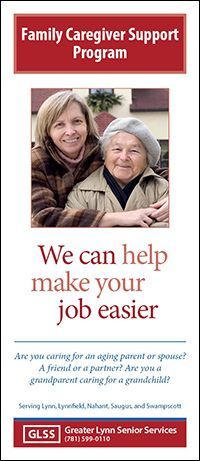
Family Caregiver Support
Program Brochure
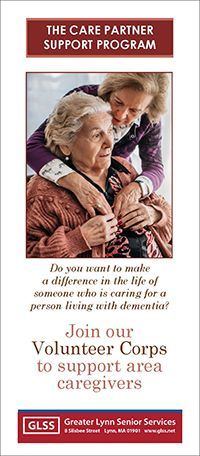
Care Partner Support Program
Volunteer Brochure

GUIDE Program
SAFE RETURN
Program
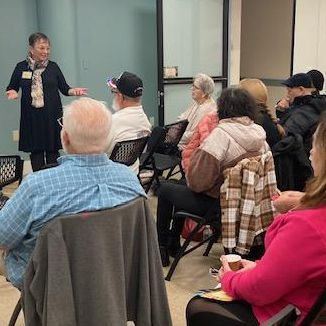
CAREGIVER SUPPORT
Local Groups in Lynn, Lynnfield, Nahant, Saugus, Swampscott

"IN THE MOMENT"
Memory Cafe

HONORING CHOICES
Website
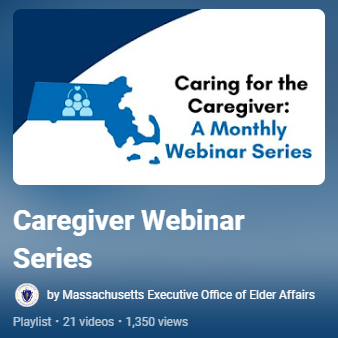
CARING FOR THE CAREGIVER
Webinar Series
DEMENTIA FRIENDS
Website
CAREGIVERS MATTER
Website
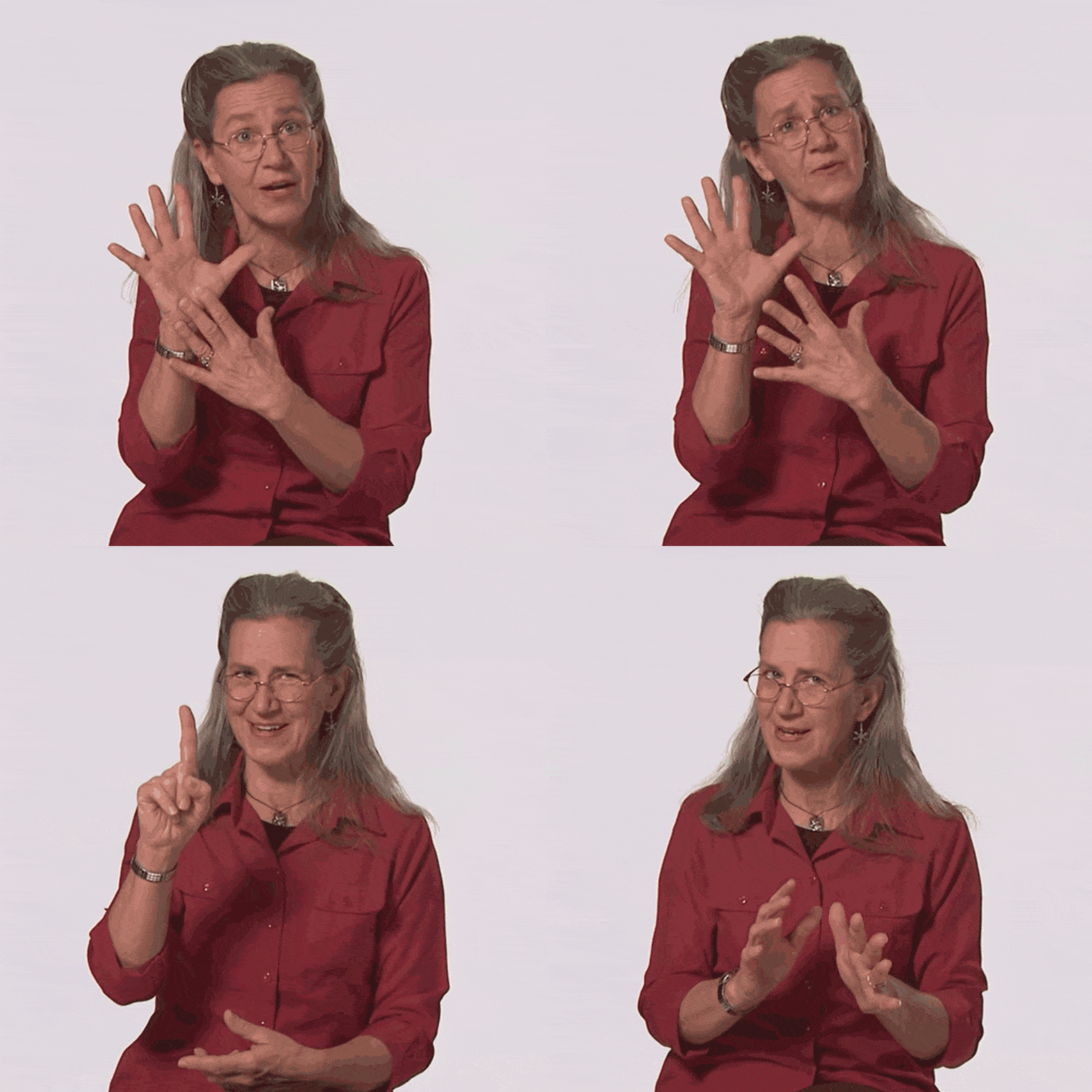
Teepa's Snow Approach™
Website

Alzheimer's Association
Website
What are the most common symptoms of Alzheimer's Disease?
The most common symptoms of Alzheimer's diesease:
- Loss of memory, decreased ability to learn, and decreased attention span
- Loss of thinking ability, judgment, and decision making
- Loss of ability to recall the appropriate word or phrase
- Loss of mathematical ability
- Disorientation: gets lost; can't find way home
- Loss of physical coordination: inability to perform skilled motor acts
- Changes in personality: the outgoing person may become withdrawn; the loving person may become uncaring
- Changes in emotion, including agitation, depression and suspiciousness
- Loss of initiative; indifferent
What other symptoms could occur?
Some of the more difficult symptoms of Alzheimer's Disease are:
- Loss of ability to communicate
- Loss of ability to recall family members and/or close friends
- Difficulty with common tasks, like driving a car
- Loss of independence
- Awareness of memory changes
- Confusion and inability to follow instructions
- Inability to perform daily tasks
- Repetition of phrases and stories
- Wandering
- Loss of social Inhibition (public displays of sexuality)
- Accusations of sexual misbehavior and of stealing
- Changes in personality, including rage and withdrawal
- Verbal profanity when outside of normal personality
- Refusal to give up driving a car
What are some early signs which might indicate Alzheimer's Disease or other related dementia?
The easiest sign to recognize when someone may be developing Alzheimer's disease or dementia is when they start having trouble communicating. Changes in the ability to communicate when one is suffering from Alzheimer's or dementia are unique to each person. A caregiver may recognize differences in a person with dementia such as:
- Difficulty finding the right words
- Using familiar words repeatedly
- Inventing new words to describe familiar things
- Easily losing train of thought
- Difficulty organizing words logically
- Reverting to speaking in a native language
- Using curse words
- Speaking less often
- More often relying on gestures instead of speaking
Keep in mind that a number of physical conditions and medication's can also affect a person's ability to communicate. Consult your doctor when you notice major changes.
What is the best way to communicate with someone who has Alzheimer's or dementia, and also has hearing or vision limitations?
If the person has difficulty hearing:
- Approach the person from the front
- Stand directly in front of the person when speaking to him or her
- Get the person's attention by saying his or her name, and give a gentle touch
- Speak slowly and clearly
- Use a lower tone of voice
- Use unspoken communication like pointing, gesturing or touch
- Write things down, if needed
- If he or she has a hearing aid, encourage the person to wear it; check the battery often
If the person has difficulty seeing:
- Avoid startling the person
- Don 't make loud noises or sudden movements
- Identify yourself as you approach the person
- Tell the person of your intentions before you begin
- Use large-print or audiotape materials, if available
- If he or she has glasses, encourage the person to wear them; keep them clean and have the prescription checked regularly
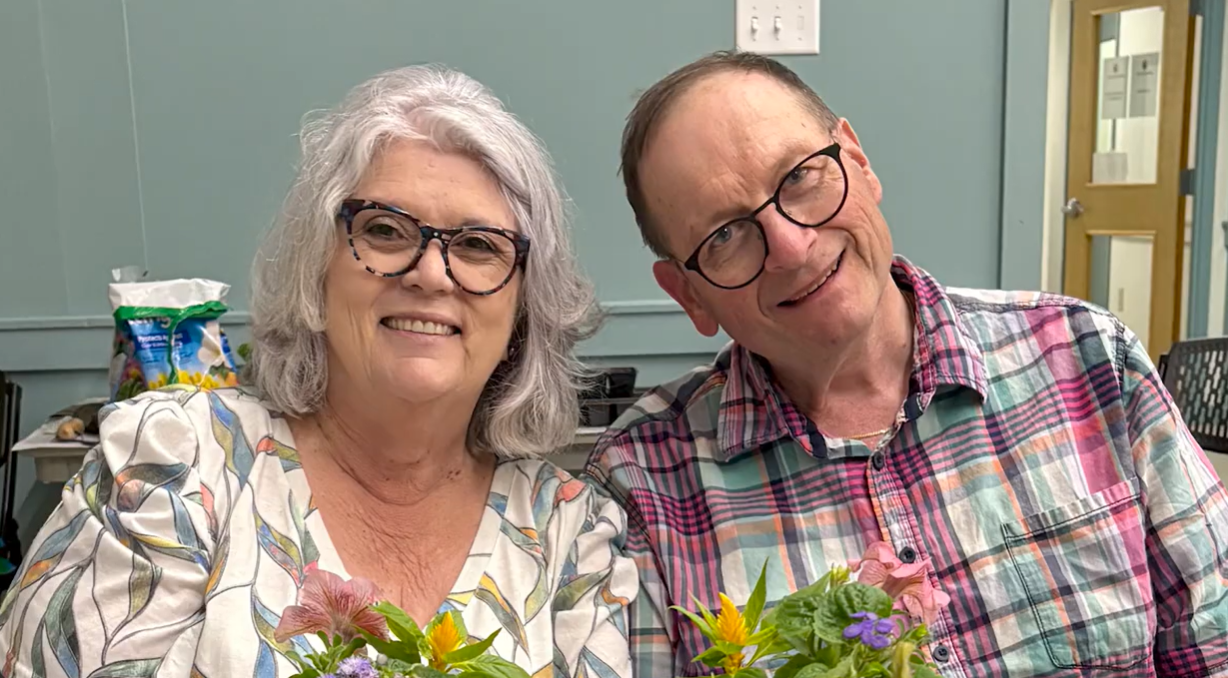
Volunteer Corps to Support Area Caregivers
Click here to watch a video about joining our volunteer corps to support area caregivers.
Who is this program best for?
The Family Caregiver Support Program (FCSP) provides free caregiver support services to a family member, friend or neighbor who is caring for a family member or friend who is age 60 and older, a family member, friend or neighbor who is caring for a person of any age who is living with dementia, or an adult over 55 years old who is raising a grandchild or caring for an adult child with disabilities. The person who is receiving care must live in Lynn, Lynnfield, Swampscott, Saugus or Nahant.
Please use the link to the left to complete our referral form or call our Information and Referral Department at 781-599-0110 for a referral to the program. An FCSP staff member will reach out to the caregiver by phone or email within three business days of receiving your referral.
Please visit www.800ageinfo.com to find a similar program if the person receiving care does not live in Lynn, Lynnfield, Swampscott, Saugus or Nahant.
Make a Referral
To make a referral on behalf of yourself or someone else, please click here to access the referral form.

Why wonder or why wait?
Call us today at
781-599-0110, or email your questions to info@glss.net.
Information & Referral staff are available Monday-Friday,
9:00 a.m.-5:00 p.m.
(except holidays).